

Complete Guide to Building Completion Certificate Rules and Regulations in Maharashtra
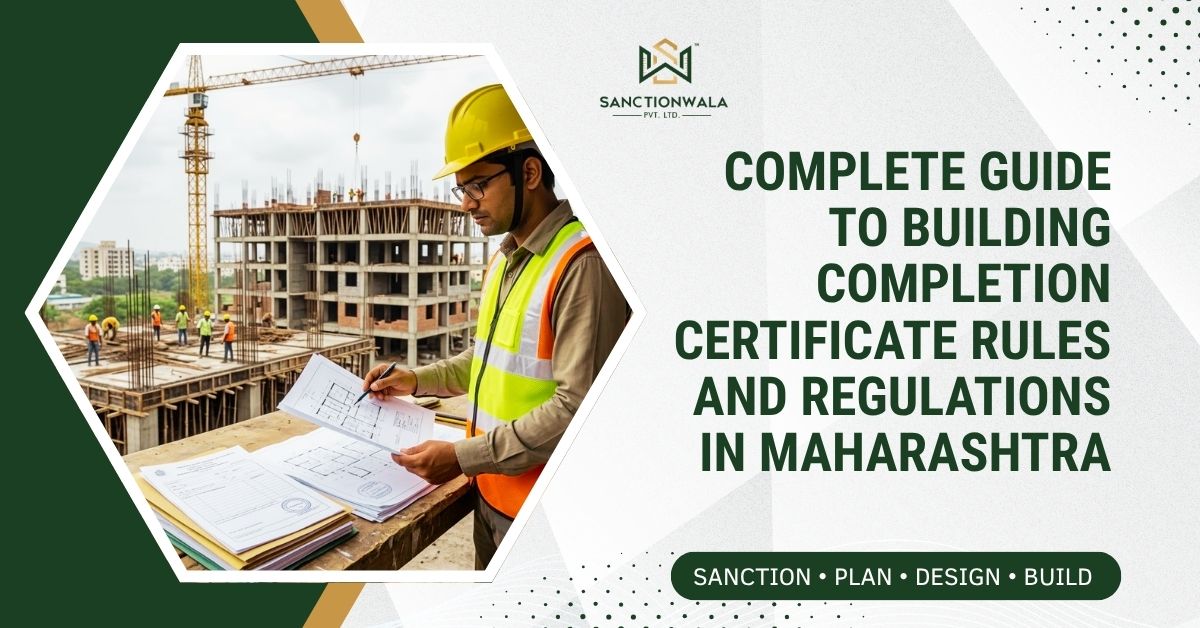
Summary : A building completion certificate confirms construction compliance. This guide covers Maharashtra’s rules, documents, application steps, inspections, delays, and the difference between completion and occupancy certificates. For owners, developers, and homebuyers, knowing which certificate is needed helps prevent last-minute surprises during handover, sale, or move-in.
Table of Contents
ToggleRequirements may differ between municipal corporations, development authorities, councils, and special planning areas. Therefore, treat general checklists as a starting point and confirm project-specific requirements with the authority that approved the building.
What Is a Building Completion Certificate?
A Building Completion Certificate (BCC) confirms that construction follows the approved plan and applicable conditions. Under relevant regulations, the owner generally submits it through the architect, licensed engineer, town planner, or supervisor who oversaw the work. The planning authority considers this submission when processing permission to occupy.
The certificate records compliance at the end of construction. Its form, supporting evidence, and process depend on the authority, building category, and applicable rules.
Which Rules and Regulations Apply to Building Completion Certificate?
Several regulations and approval conditions can affect building completion in Maharashtra. The following requirements should be reviewed before applying.
1. Maharashtra Regional and Town Planning Act, 1966
- The Act provides a legal framework for planning and development in Maharashtra.
- Construction and development must comply with applicable planning permissions and legal requirements.
- Property owners should verify the conditions attached to their approved development permission.
Read the Maharashtra Regional and Town Planning Act, 1966 for the relevant legal provisions.
2. Unified Development Control and Promotion Regulations (UDCPR)
- UDCPR establishes development control requirements in areas where it applies.
- Provisions may cover building height, setbacks, floor space index (FSI), parking, access, and other construction requirements.
- Applicability must be confirmed because different planning areas may follow different regulations or specific provisions.
3. Compliance With the Sanctioned Building Plan
- Construction should match the approved layout, dimensions, floor areas, height, and other sanctioned details.
- Unauthorized additions or significant deviations may require corrective work or revised permission.
- Owners should compare the completed structure with the approved drawings before submitting the completion application.
4. Fire Safety and Applicable NOC Requirements
- Buildings subject to fire-safety requirements must obtain the applicable fire approvals and certificates.
- Depending on the project, authorities may require water, drainage, environmental, highway, airport, or other departmental clearances.
- All relevant permission conditions should be fulfilled before the completion application is processed.
5. Rules of the Competent Planning Authority
- The responsible municipal corporation, development authority, or local planning body determines the applicable submission process.
- Applicants must follow the authority’s current forms, document checklist, inspection requirements, and prescribed charges.
- Projects under special planning or industrial authorities may have additional requirements.
For projects under PMRDA, refer to its published rules and regulations and confirm the latest project-specific requirements.
What Documents Are Required for a Building Completion Certificate?
The checklist varies by authority and building type. Prepare these documents required for building permission where applicable:
- Completion certificate form signed by the owner and licensed professional.
- Sanctioned plan and as-built drawings.
- Structural stability certificate, where required.
- Lift operational certificate, where applicable.
- Fire NOC, where required.
- Applicable departmental NOCs, such as drainage, water, environmental, airport, or highway clearances.
- Proof of payment for applicable charges and dues.
- Other forms or compliance records requested by the authority.
Check the authority’s project-specific checklist and ensure certificates are current and properly signed before filing. Make sure names, survey details, permission numbers, and plan revisions match across the submitted documents.
What Is the Process for Obtaining a Building Completion Certificate?
After construction is complete, the process typically follows these steps:
- Compare construction with sanctioned plans and conditions.
- Ask the supervising professional to inspect the work and prepare the certificate and drawings.
- Collect required structural, lift, fire, and other certificates.
- Submit the application and documents through the authority’s prescribed system. PMRDA, for example, offers online development-permission services.
- Respond to scrutiny remarks, pay charges, and attend any required inspection.
- Correct deficiencies and provide revised records if required.
The authority checks compliance before deciding on occupancy permission. Timing depends on rules, application completeness, inspections, and unresolved objections. Keep copies of submissions, acknowledgements, plans, and correspondence. If an online portal is used, monitor its status regularly and retain receipts or reference numbers for follow-up. Do not rely on verbal updates alone when a written clarification or record is available.
What Is the Difference Between a Completion Certificate and an Occupancy Certificate?
A completion certificate records construction compliance. An Occupancy Certificate (OC) is issued by the competent authority after reviewing the completion submission and deciding whether the building may be occupied. The documents are related but not interchangeable.
A completion submission alone is not automatically unrestricted permission to move in. Check the OC status and any conditions with the responsible authority before occupation or handover.
What Problems Can Delay Building Completion Certificate Approval?
Delays commonly arise from deviations from sanctioned plans, missing certificates or NOCs, unpaid charges, measurement discrepancies, and unanswered scrutiny remarks. Unapproved additions may need revised permission before the application proceeds.
Missing documents, plan discrepancies, and pending approvals can slow down the completion process. Learn about the common reasons for PMRDA building permission delays to understand these issues and how to avoid them.
Review the original permission conditions against the finished property. Resolve deviations through the correct process instead of assuming an inspection will overlook them.
How Can a Building Permission Consultant Help With Completion Approval?
A building permission consultant can review plans and conditions, identify document gaps, coordinate with architects and engineers, and organize certificates. They can also track applications, respond to authority remarks, and coordinate corrections.
A consultant cannot guarantee approval or replace the authority’s assessment, but can clarify steps and help reduce filing errors. Choose one familiar with the relevant authority and project type. Early review is especially useful before filing, when missing records or plan differences can still be addressed without unnecessary back-and-forth.
Get Professional Help With Building Completion Approval
Completing construction is a major milestone, and required approvals deserve equal attention. Sanctionwala Pvt. Ltd. helps owners and developers understand requirements, organize documents, and coordinate completion steps. A building plan approval consultant in Pune can help you move forward with greater clarity and confidence.
Avoid confusion over paperwork and compliance conditions. Connect with our experts to discuss your property, understand the next steps, and plan your application. Contact us for professional guidance and a clearer path to compliant project completion.
Frequently Asked Questions
The competent authority handles approval; the supervising licensed professional generally submits the certificate.
Requirements depend on local regulations and project conditions. Follow the responsible authority’s procedure.
No. Completion records construction; an OC concerns permission to occupy.
Do not assume it is permitted. Confirm the position with the competent authority.
The authority may require correction, revised permission, or other compliance action.
Most Recent Post
-
Gunthewari Regularisation Deadline 2026: Important Dates and Rules for Property Owners
-
Is NA Permission Still Required in Maharashtra? Latest Rules Explained
-
Land Conversion in PMRDA and PCMC Areas: Important Rules and Approval Requirements
-
NA Order in Maharashtra 2026: Latest Rules, Process, and Key Changes
-
Complete Guide to Building Completion Certificate Rules and Regulations in Maharashtra


Quick Contact
- Architectural Design (1)
- Building Permission (15)
- Building Plan Approval (14)
- Commercial Architecture (1)
- Construction Permission (1)
- Gunthewari Regularisation (1)
- Highway Approval (2)
- Highway NOC (2)
- Highway NOC For Construction (2)
- Land Conversion (1)
- Land Conversion in PMRDA (1)
- Land Development (1)
- Land Feasibility (1)
- Land Liaisoning (1)
- Land Measurement (1)
- NA Conversion (2)
- NA Order (1)
- NA Permission (1)
- PCMC Building Permission (14)
- PMC Building Permission (1)
- PMRDA Building Permission (1)
- Residential Architecture (1)
- Roadside Building NOC (2)