

NA Order in Maharashtra 2026: Latest Rules, Process, and Key Changes
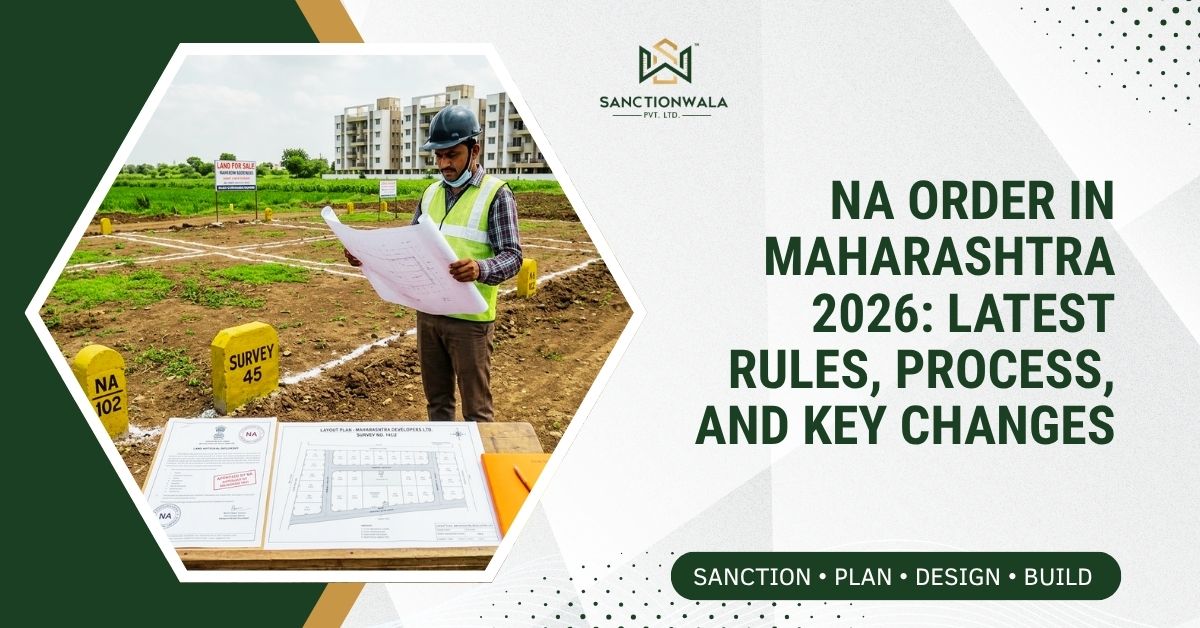
Summary : An NA (Non-Agricultural) order relates to the permitted use of land for purposes other than agriculture. Maharashtra introduced important changes to its land conversion process through the Maharashtra Land Revenue Code (Second Amendment) Act, 2025, and the Government Resolution dated 10 February 2026. This guide explains the revised NA rules, conversion premium, application process, required documents, and building permission requirements for property owners and developers.
Table of Contents
ToggleBuying agricultural land or planning to construct a house on a plot requires more than checking its ownership documents. You must also confirm whether the proposed use is permitted under the applicable development plan or regional plan. Understanding the latest NA rules can help you identify the approvals required before investing in construction or land development.
Maharashtra’s revised framework aims to simplify land conversion by removing the separate Collector’s permission requirement in eligible cases and replacing annual NA assessment with a one-time conversion premium. However, land-use restrictions, special tenure conditions, and planning regulations continue to apply. Knowing these changes can help you plan your property project with greater clarity.
What Is An NA Order And Why Is It Important In Maharashtra?
An NA order is traditionally an official permission allowing agricultural land to be used for a non-agricultural purpose, such as residential, commercial, or industrial development. It establishes that the proposed use is permitted under the applicable legal framework.
For example, someone purchasing agricultural land near Pune to construct a residential building must verify whether residential development is allowed on that particular plot. Ownership alone does not establish construction eligibility.
An NA order should also not be confused with building permission. Permission for non-agricultural use concerns the permitted purpose of the land, whereas development or building permission addresses the proposed construction and its compliance with planning regulations.
What Are The Latest NA Order Rules In Maharashtra In 2026?
The Maharashtra Land Revenue Code (Second Amendment) Act, 2025, published on 31 December 2025, introduced significant changes to the NA conversion framework. The Government Resolution dated 10 February 2026 provides implementation guidelines. Under the revised Section 42, separate permission from the District Collector is not required when the proposed use is permissible under the applicable planning framework and the competent planning authority can grant development permission or approve building plans.
The major changes include:
- Simplified Permission Process: Eligible landowners can approach the relevant planning authority without obtaining separate NA permission from the Collector.
- Revised Conversion Charges: A one-time conversion premium replaces the previous annual NA assessment and the earlier conversion-tax framework under the amended provisions.
- Sanad Requirement: A separate NA sanad is not required in eligible cases where the planning authority has granted the necessary development or building-plan approval.
- Updated Revenue Records: Information about approved development can be coordinated with the relevant digital land-record systems.
- Continued Compliance: Restricted-tenure land and properties subject to special government conditions may still require additional approvals or payments.
These changes simplify the process, but they do not automatically make every agricultural plot suitable for construction. The proposed use must still be legally permissible.
Who Can Apply For An NA Order In Maharashtra?
Landowners proposing residential, commercial, or industrial development must first establish whether the intended use is permitted under the applicable development plan, regional plan, or other relevant planning regulations.
Where the revised provisions apply, the landholder can approach the competent planning authority for the necessary development or building permission. Applications may be submitted through systems such as the Building Plan Management System (BPMS) or Auto DCR, where available, or through the prescribed offline procedure.
Land held under Occupancy Class II or other restricted tenure may need additional scrutiny. Receiving building permission does not automatically convert restricted-tenure land into Occupancy Class I. Any applicable government approval, premium, nazarana, or other tenure-related condition must be addressed separately.
What Is The Process For Getting NA Approval In Maharashtra In 2026?
Although a separate Collector’s NA order is no longer required in eligible cases, landowners still need to follow the applicable approval process before development.
Step 1: Verify Land Records: Check the 7/12 extract, property card, ownership documents, survey details, and any recorded restrictions.
Step 2: Confirm Permitted Land Use: Obtain the relevant zoning information or development-plan remarks to establish whether the intended residential, commercial, or industrial use is allowed.
Step 3: Identify The Competent Authority: Determine which planning authority has jurisdiction over the property and confirm its application procedure.
Step 4: Submit The Application: Prepare and submit the required ownership records, site details, drawings, and supporting documents through the applicable system.
Step 5: Pay The Applicable Premium: Where required, pay the prescribed one-time conversion premium and satisfy any other applicable charges or conditions.
Step 6: Obtain Written Approval: Secure the required development or building permission and comply with its conditions before beginning construction.
Which Documents Are Required For NA Land Approval?
The exact document list depends on the property and the relevant authority. Commonly required records include:
- Latest 7/12 extract or property card and ownership documents.
- Sale deed or other documents establishing the applicant’s legal interest in the property.
- Land survey map, site plan, and property boundaries.
- Zoning certificate or applicable development-plan remarks.
- Proposed building plans and relevant technical drawings.
- Previous permissions, tenure-related approvals, and applicable NOCs, where required.
Check the authority’s current checklist before submitting an application. Missing ownership records, conflicting survey details, or unresolved land-use restrictions can delay scrutiny.
How Are NA Conversion Premium And Other Charges Calculated?
Under the amended Section 47 of the Maharashtra Land Revenue Code, the one-time conversion premium is calculated using the applicable market value determined under the Annual Statement of Rates, commonly known as the Ready Reckoner Rate.
The statutory rates are:
- Up To 1,000 Square Metres: 0.1% of the applicable land market value.
- Above 1,000 And Up To 4,000 Square Metres: 0.25%.
- Above 4,000 Square Metres: 0.5%.
The applicable slab depends on the area of the land, and the relevant market-value assessment must be established before calculating the amount. Other development charges or payments under separate laws may also apply.
Existing NA properties also need attention. The February 2026 guidelines prescribe a one-time premium for certain properties converted before the amendment, using the historical Annual Statement of Rates relevant to the conversion period. The guidelines provide a one-year payment period from their issuance for the specified legacy cases. Owners should verify their individual liability and applicable deadline with the competent authority rather than assuming that abolishing annual NA tax removes every outstanding obligation.
What Should You Check Before Developing NA Land In Pune?
Before starting construction, confirm the property’s ownership, permitted land use, access, development-plan reservations, tenure conditions, and applicable conversion premium. Check whether the project needs additional fire, drainage, water supply, highway, or other statutory NOCs required for a building.
Remember that the applicable requirements may differ between the Pune Municipal Corporation (PMC), Pimpri-Chinchwad Municipal Corporation (PCMC), PMRDA, and other planning jurisdictions. Obtain the required written permissions before starting work.
How Can A Building Permission Consultant Help With NA Compliance?
A building permission consultant can help you understand the applicable land-use rules, review property documents, identify the competent planning authority, and coordinate the required drawings and application submissions. Professional guidance can also help identify restricted-tenure conditions, missing documents for building approvals, zoning concerns, and additional NOCs before the application proceeds.
For property owners in Pune, resolving these issues early can reduce avoidable application delays and help prevent costly mistakes. A consultant assists with documentation and compliance, while statutory approval remains the responsibility of the competent authority.
Need Help With NA Permission? Get Professional Support
Planning to develop a plot or convert agricultural land for a permitted purpose? Sanctionwala Pvt. Ltd. helps property owners understand applicable land-use rules, documentation requirements, and development approvals. Connect with an experienced NA order consultant in Pune to identify the right steps for your project before moving ahead.
Your development plans deserve the right foundation. Contact us today to discuss your property documents, approval requirements, and next steps. Get practical guidance from Sanctionwala Pvt. Ltd. and move forward with greater clarity and confidence.
Frequently Asked Questions
A separate Collector's permission is generally not required when the proposed use is permissible under the applicable planning framework and the competent planning authority can approve the development or building plan. Property-specific restrictions must still be checked.
Yes, the amended framework abolishes the previous annual NA assessment. However, certain existing NA properties are subject to the one-time premium provisions outlined in the February 2026 guidelines.
You may not need a separate Collector's NA order if the revised provisions apply, but construction is not automatically permitted. The intended use must be allowed, and the required development and building permissions must be obtained.
The prescribed one-time premium is 0.1%, 0.25%, or 0.5% of the applicable land market value, depending on the plot's area. The authority must determine the appropriate rate and valuation basis for the specific case.
Yes. A consultant can assist with land-record verification, zoning checks, document preparation, application coordination, and building-plan compliance. The final decision rests with the competent authority.
Most Recent Post
-
Gunthewari Regularisation Deadline 2026: Important Dates and Rules for Property Owners
-
Is NA Permission Still Required in Maharashtra? Latest Rules Explained
-
Land Conversion in PMRDA and PCMC Areas: Important Rules and Approval Requirements
-
NA Order in Maharashtra 2026: Latest Rules, Process, and Key Changes
-
Complete Guide to Building Completion Certificate Rules and Regulations in Maharashtra


Quick Contact
- Architectural Design (1)
- Building Permission (15)
- Building Plan Approval (14)
- Commercial Architecture (1)
- Construction Permission (1)
- Gunthewari Regularisation (1)
- Highway Approval (2)
- Highway NOC (2)
- Highway NOC For Construction (2)
- Land Conversion (1)
- Land Conversion in PMRDA (1)
- Land Development (1)
- Land Feasibility (1)
- Land Liaisoning (1)
- Land Measurement (1)
- NA Conversion (2)
- NA Order (1)
- NA Permission (1)
- PCMC Building Permission (14)
- PMC Building Permission (1)
- PMRDA Building Permission (1)
- Residential Architecture (1)
- Roadside Building NOC (2)